It’s Always About the People (a commercial)

 There’s a lot of talk about Joe the Plumber this week-maybe representing a sudden interest in the opinions of working people?  So, since yesterday was my last day as bookkeeper at Ballard Optical in (where else) Ballard, I’m going to throw out a couple of opinions here regarding the people I work with and why it’s so important to value the people you work with, those you work for, and those you serve.  

Lisa, in the picture above, is technically the receptionist, decorating goddess, recycling queen, and a good friend.  She is also now the temporary bookkeeper (not her first choice!). She treats each person who comes in, or who calls, as if they were family, maybe better than some families.  It’s not a show.  She really does care, and it goes way beyond just the business part-it goes above and beyond to the human thing and sincerely valuing people.   

Cynthia, one of the two amazing opticians who work here, is one of the nicest people I’ve ever met.  She sincerely cares about each customer as a person, not just a business deal.  Besides that, she’s good at her job, and she’s a lot of fun.  Gentle caring people make for a for a really good workplace!  

Isabell, who like Cynthia, was too busy for a picture yesterday, has been fitting glasses, choosing fabulous frames, and lovingly caring for people in this business (and the rest of her life) for a long time.  She also goes above and beyond reasonable care in making each person feel valued and listened to, and trying to find solutions that work.  Amazing lady.  

And then there’s the boss, Dr. Kimpton.  He’s been at this business for over 34 years, and is really good at it.  The kind of guy you would want for a Dr. (thorough, systematic, stable, and fair).  It was a pleasure to work for him for the last 4 1/2 years.  

I guess what I saw in my coworkers here each day was the living out of the unwritten rule that good customer service comes from treating customers like you’d want to be treated.  Applied theology in the eyeglass business.  Go figure.  If you follow that rule, you can find dignity and meaning, even in a working class job like this, and live in a way that treats even difficult people with dignity and lets you keep your dignity as well. I’m gonna miss these guys!

On using words (ramblings)

My mother made me a poet.  Not necessarily by inspiring me to read fine literature, but by her unique ability to string words together in ways you never forget.  I learned from her the power of words at an early age.  She had a well developed sense of meter and timing.  She taught me never to take words for granted and to carefully measure the effect of the ones I used.  I learned to be careful and sparing-that words could build up or tear down, and that even after attempting to take them back,  their impact can remain, their sound resonating in your memory like fingernails on a chalkboard.

Writing has always been my passion, at least since I was a third grader in Mrs. Bosshard’s class.  Every day that year, I’d present her a new story first thing in the morning.  Although considered quiet and much too shy at that stage, I had discovered words could express things just fine if they were put on paper.

In high school, the creative writing class was taught by an “old hippie” with a gift for bringing out the creativity in people.    At one point, after reading my rather dark poetry, she called me in for a conference; she was the only person who noticed the depression in process.  She paid attention.  Years later, two of my children were also blessed  to have also had her for a teacher.

When it comes to using words, (both in conversation and in writing), I prefer the short version.  Having to add enough detail, and box car enough thoughts to make something longer than a paragraph seems a bit of a challenge, but once the train gets rolling it’s kind of fun.

Writing things out on paper instead of letting them chase each other around in my head makes them easier to edit.  I like the “delete” button, the drag and drop technique, and the bold print of emphasis much better than arguing or screaming.  Emphasis by italics feels more civilized than clarity by decibel level and can express strong feelings just as well.  There’s nowhere left for words to hide when they are displayed in black and white on the screen, hidden in plain sight.  I can move sentences and ideas around, try new things, and reformat my opinions (both internally and externally).  Making the ideas stand still long enough to be looked at objectively and cut down to size is exhilarating.

Poems and songs are to writing what photographs are to full-length films.  They give a glimpse of a moment but they do not articulate the depth, the character development, background conflicts or the interconnectedness of events the way longer narratives do.  The fight to add detail continues.  I am drawn toward the guerilla tactics of poetry—select the target, plant the explosives, then run for cover before it detonates.  I need to learn more patience for the process of development, strategy and written dialogue.  Perhaps if I continue to work on written communication and doing the “long version,” verbal communications will become less draining and intimidating?  One can dream that being comfortable with words in one setting will make them more comfortable with words in other settings….

How do you find new neighbors?

It was a strange coincidence that our last day at our home church  was September 25, 2003–“Friendship Day.”  As our church celebrated reaching out to their neighbors and shared a salmon barbecue with the community, we were saying goodbye.   The past six weeks had happened so fast we hadn’t even gotten to tell our pastor until that day that we were leaving the community we had spent 26 years in and moving to Seattle that week with our two college-aged kids.  It was a good day to celebrate the friendships we’d enjoyed, and to say goodbye to people we loved.  It was good but it sure wasn’t easy. 

Our whole family was in a time of transition at that point: our son graduated high school in June, our oldest daughter got married in August, the house we had built from scratch and raised the kids in sold, our son and middle daughter were going to start college and needed somewhere to live…and it goes on.  It was like the pot was getting stirred but I didn’t always feel in control of the spoon.  Sometimes I felt more like a little mouse tossed in the toilet after the handle had been pulled to flush it.  My husband had lived in different places, but moving was a new experience for me and for the kids. 

What bothered me most about moving was leaving my church.  These people had been my neighbors.  Kai Erikson in “Communal Trauma: Loss of Communality” defines a neighbor as “… someone you can relate to without pretense, a familiar and reliable part of your everyday environment; a neighbor is someone you treat as if he or she were a member of your immediate family” .  I had raised kids with these neighbors.  We’d helped each other build houses, shared weddings and births, made music together, home schooled kids together, and experienced life together in major ways.  It was disorienting.  I didn’t know who my “neighbors” (in the communal sense), were going to be now, what my connections and point of reference were supposed to be.  I wasn’t even sure how I was going to find out. 

Speaking about the loss of community experienced due to a disaster, Erikson states, “… within so tightly knit a community…where most residents spent their entire lives without ever leaving, the sense of self was so closely tied to a sense of belonging to the community as a whole that loss of community meant loss of personal identity.  The closeness of communal ties is experienced…as a part of the natural order of things, and residents can no more describe that presence than fish are aware of the water they swim in.  It is just there, the envelope in which they live, and it is taken entirely for granted”.  She goes on to add “…those neighborhoods were like the air people breathed—sometimes harsh, sometimes chilly, but always just a basic fact of life”.  The residents in Erikson’s essay had lost their community due to a disaster.  I was being transplanted for happy reasons, but the sense of loss and lostness was similar. 

I was leaving neighbors to whom I was that kind of close to.  The closeness I’m talking about didn’t come from all being Republicans (we weren’t—although the media would probably assume otherwise), or having the same income level, identical theology or similar family backgrounds.  The church included folks with a variety of marital statuses, drug addicts and alcoholics in various stages of recovery, pastor’s kids, business owners and the unemployed.  Some were on public assistance and some were wealthy.  There were folks counting the days to retirement and stuffing their 401ks and folks just trying to figure out how to survive if they lived long enough to get old.  Some wrestled quietly with secrets they did not yet feel safe to share.  There were a lot of kids.  Closeness and a sense of community came from sharing values bigger than our own lives, and when there was conflict, unity (in spite of diversity) was maintained, by choosing to “treat other people the way you would want to be treated.”   

Starting over gives you a chance to reevaluate what you’re looking for, to see with new eyes, to write a new script for how you want things to go.  Seattle was definitely not Whidbey Island—the choices seemed endless. 

 We tried several churches the first few weeks we were here, but weren’t really sure how we fit.  One Sunday morning, I did a web search and found Quest, a fairly new church in Ballard, which is where we work.  The web site gave a glimpse of a church where justice and compassion were part of the foundation, not an afterthought.  For the past few years, we’ve been involved with World Aid, a non-profit group based here in Ballard that sends medical and humanitarian relief supplies to folks in Burma.  Our hearts are strongly pulled towards doing justice in practical, hands on ways.  We figured it was worth checking out. 

Like Andrea Lowenstein wrote, “For me, as for most people in modern society, the question of identity is a complex one.  Some of my identities are old, others are new or in transition”.  Although some of the roles in my life were the same as many of the women at Quest, (wife, mother, daughter, sibling, Christian,citizen, musician, poet, songwriter, employee), other roles were a significant contrast.  Quest  was composed of an ethnically diverse group of mostly single (70%+), college educated people under age 35, who were in good shape.  I’m over 45, uneducated by comparison, slightly round, a mother of three grown children, and have been married to the same wonderful man for 26+ years. 

Still, in spite of the differences, it seems like our place in life is similar to many others in the congregation.  We’re trying to figure out what’s next for this stage of our lives, to find ways to use the skills and gifts we’ve been given to do justice and compassion in a world that has needs wherever you look.  In their reading of the story of the Good Samaritan in the Bible (Luke 10:30-37), the vision at Quest seems to be to become the ones who pick up the guy off the street instead of walking by on the other side, who offer acceptance, love and a listening ear, and meet practical needs both here in our city and in other places. Even though we are in many ways different than the majority there, the principles we form our life around are the same.  Quest seems like a good place to find new neighbors.

(wrote this for an English class in 2005-reflecting on it again as we approach our 5th year anniversary of being in Seattle….)

 

You gotta read the book!

Last week in Alaska, I had time to sit and read “Three Cups of Tea: One Man’s Mission to Promote Peace….One School at a Time,” by Greg Mortenson and David Oliver Relin. This is my new all time favorite (takes my breath away with hope) book.  It tells the story of Mr. Mortenson helping to build schools in rural villages in Afghanistan and Pakistan, learning from those who know their needs, their culture, and know how to proceed with wisdom appropriate to their communities.  It gives me hope that more of us in more ways can make creative partnerships like this.  We in America have been hugely blessed with resources, but we have SO much to learn from listening to those in communities and cultures we do not understand and that are unfamiliar to us.   Seems like I always learn more by listening than by talking….asking, “How can we serve you?” gets some amazing answers.  Coming into places with our plan of how it’s going to be leads to those we’d like to “help” being left cleaning up our messes behind us.  (At one point in the book the village headman lovingly comes to him in the midst of a mutual project and says, “You’re driving us nuts!  Slow down!)  He has the grace to listen and learn.  The other cool thing with this book…all the experiences of his life that maybe didn’t add up in a conventional way, or fit the average “career path”….. but they all helped him (a mountain climber familiar with places where people ordinarily wouldn’t go who ends up where nobody in their right mind would ever be), to do what he ended up finding to do that mattered.  I’m a real sucker for those kinds of stories!

An example of how this works in another context is the Karen Teacher’s Working Group.  These folks provide teacher training, curriculum and school supplies to IDP schools in Burma.  Not an easy task.  Some of the videos on their web site, and the links to the reports from last year’s material distribution, where people are walking days through enemy territory to get to the mobile trainings or to get supplies for their schools, and very humbling.  It’s worth a look.  Education is hope in contexts of violence, oppression and poverty. Reading “Three Cups of Tea”, and having had the privilege of meeting some of the folks at the Karen Teacher’s Working Group,  convicts me to look for ways to support what they do in a greater way. The Seattle Burma Roundtable  does a raffle every year (this fall) to raises money to help support purchasing school supplies for IDP kids in Burma.  Two dollars buys school supplies for a child for one year.  Pretty good bargain, huh?  For less than the price of one well-loved latte, I could help educate a kid?  Sounds like an investment to me, and I really love coffee. (Will post more when the raffle starts….)

PS  Before I read “Three Cups of Tea,” actually, ever since I was a kid, my favorite book has been “Hinds Feet On High Places,” by Hannah Hurnard. Amazing allegory about the “Chief Shepherd” leading “Much Afraid” on a journey to become more like Him and to grow in faith and grace, in spite of her past, her failures, her present circumstances, her inadequacies, her relatives, her financial situation, or her disabilities….(anyone see where I’m going with this?). I didn’t know ’til I did a web search on her tonight that she’s considered to have gone off the theological deep end later in life.  But, since I’m not a theologian, I think I’ll still treasure the hope that book has given me for years, that God knows my weaknesses, and has a purpose for my life anyway-that I’m not the sum total of my failures.  I’ll try to pay attention to how the journey unfolds so in case something good happens, I don’t miss it.  (Her actual life story proves God is bigger than our fears and that you can do some things for the love of God or of a group of people that you wouldn’t even consider doing for any other reason!)  

Why I Love My Husband

Got your attention, huh?  My girls asked me one time, when they were teenagers, to describe what I would consider a hot guy.  I described their dad–they listened well enough to know exactly who I was talking about:) We’ve been married 30 years, as of last month.  I am still amazed at the gentleness and kindness this wonderful man demonstrates in his life and in all of his relationships.  Especially with me.

I’ve had a unique opportunity to observe him this week, getting to fly up to Alaska with our son, Corey, and spend a week with him on his gillnetter.  We fished for two days (something he and Corey had talked about since Corey was old enough to know what a salmon was, I think), and then headed back into town to wait for the next opening.  The seiners were going to fish Wednesday and us little guys would have to wait until Thursday and Friday.  Then the steering went out. 

Now, if you’re going to have your autopilot and your steering go out, this is actually a pretty good time for it.  We weren’t in little tight areas like we had passed through on the way from Juneau to Sitka….we were in a big pretty sound looking at a volcano with some snow still on it.  We crept into town, and the next morning found a guy who could get the part (and didn’t have to fly in from another town).  Since there was nothing we could do besides wait for parts to arrive, we spent a few days hanging out reading, exploring, and enjoying.  Nice. 

We are very different.  I work a 7-5 job in Seattle.  For this year, at least, he’s returned to fishing (what he did before he got married and had kids that he didn’t want to miss raising).  He likes google maps, I like mapquest.  He came to faith as an adult, I was raised in church.  I’m from the COUNTRY, and he was raised in the city (then lived in Alaska).  He can make friends anywhere (as we saw this week, again), I’m awkward in crowds.   He likes taking new routes, I prefer ones where the exit sign is marked and memorized and I’m not as likely to get lost.  He reads and remembers the details, I skim and then go back and read it again and take notes if it was good.  He can organize a project, I’m overwhelmed by sorting through the options…..

BUT even in our diversity, in the important things, we are united.  Both brought back from destruction by the grace of God, both hold faith to be central to our choices and our hopes, both passionate about advocating for justice, both really want to help in practical ways, both willing to be flexible on the not so important things so we can make room for the ones that matter most.  Both willing to honor the gifts each of us have that are different but complimentary to what we can do together.  Both crazy about our kids and each other. 

So, guess my point is, even though we approach a lot of things differently,  that step of faith that took us from planning our lives, to planning our life together was so worth the risk!  A long ways down the road, I realize I am even more blessed than I suspected was possible, to still have this wonderful partner in my life.

Certain Inalienable Rights….

Wikipedia describes “inalienable rights” as follows: “Inalienable (Individual) Rights are: natural rights, among these are life, liberty, and the pursuit of happiness. They are the most fundamental set of human rights, natural means not-granted nor conditional. They are applicable only to humans, as the basic necessity of their survival”wikipedia

The Universal Declaration of Human Rights (linked below) is pretty breathtaking reading.  http://www.un.org/Overview/rights.html  I wonder how many people are like me and have heard about it and never read it, until now.  Wonder if those writing it thought it would help end genocide-that never again would the world have to figure out how to respond to the nightmare war and massacre and ethnic cleansing could become.  Wonder if they could imagine that Rwanda, Bosnia, Darfur would happen anyway. Wonder if nations would still talk, instead of act.  Wonder if they could imagine an illegal military dictatorship blocking aid to those suffering a disaster like Cyclone Nargis, hoping a natural disaster would finish what their disastrous policies had already been working on. Wonder what would happen if all of us everywhere held our governments to the standards set out in that document, not just as they apply to our countrymen and women, families, friends, religions or ethnic groups, but as the inalienable rights of all people everywhere?  What if we lived, acted and voted, like human rights were for everyone?

Justice or righteousness?

It amazes me how important the choice of one word can be, either in politics, or in an argument, or even theologically.  Like a lot of American Christians, I have several Bibles, and don’t read any of them as much as I should.  (Working on that).  I was raised with the King James version (that definitely dates me!).  Learned verses like Matthew 6:33 “Seek ye first the kingdom of God, and his righteousness; and all these things shall be added unto you, ” along with other Christians of my generation.  It’s a famous verse and a nice song. 

But that version doesn’t impact me nearly as much as the same verse taken from The New English Bible, which says: “Set your mind on God’s kingdom and his justice before everything else, and all the rest will come to you as well.” 

Hate quibbling about words….but this one makes me think.  Maybe ’cause I was raised on King James, (and have a thick head and hard heart at times), words can bounce off of me pretty well-lack of impact due to familiarity?  Reading in a different translation sometimes gets my attention better (or hearing the words and principles in a song!).  Righteousness seems like it’s about behaving well, or just about God instead of me.  Seeking justice pulls at me as a call to action, and highlights how ineffective some of my inaction/attempted action is at times….it calls me to more.

(The New English Bible also uses justice, just or judgment in a lot of the other verses where King James uses righteousness….another reminder to me that God cares about justice and so  should I).

I love it/hate it, when someting starts to get through to me.  Usually calls me to humility and change…..

Watch, Report, Condemn and Move One….?

Benedict Rogers, (see link) points out some parallels between Burma and Zimbabwe that we should all take notice of:

” As the world focuses now on the crisis in Zimbabwe, the parallels between Robert Mugabe’s reign of terror in that failed state and the disaster unfolding in Burma are stark. Both countries, former British colonies, were once the most prosperous in their regions – Zimbabwe, the “bread basket” of Africa and Burma, the “rice bowl” of Asia. Both are now ruled by paranoid tyrants who have ruined their economies and terrorised their people. In both countries, there is a legitimate democratic opposition that has won elections but been denied their rightful place in government. The rulers of both nations remain in power illegitimately, having stolen their elections through intimidation, harassment, and rigging – or simply by ignoring the real result. And in both countries, the regimes are guilty of the same sad litany of human rights violations: torture, rape and murder, and the refusal to allow international aid organisations to help their people. And yet, so far in both countries the world’s politicians and media watch, report, and condemn – and then move on”.  http://www.thecuttingedgenews.com/index.php?article=603  

http://www.zimbabwesituation.com/jul13a_2008.html#Z8

Zaw Nay Aung writes (see link above): “When a country is facing a significant challenge of humanitarian disasters, the international community has to intervene to resolve the conflicts rather than doing nothing and calling it an “internal affair.” Is it the right thing to do to let people die from natural disasters such as Cyclone Nargis in Burma or man-made disasters such as extra-judicial killings, arbitrary detentions and “mass intimidation'” against people who speak for justice, freedom and equality of prosperity? If you look at the recent events in Zimbabwe and Burma, the authoritarian regimes and their militias violently cracked down on the opposition and controlled power undemocratically and illegitimately. Although the UN actions are initiated, the powerful “vetoes” have been overriding the process of resolving political stalemates in Burma and Zimbabwe.”

http://www.zimbabwesituation.com/jul13a_2008.html#Z6

In Burma after the cyclone, while governments and international organizations waited for “permission” from an illegal regime to save lives,  people took things into their own hands.  Using any resources that could be acquired, and any local networks already in place, people helped each other.  In the words of one church leader quoted in Mr. Rogers article: “….nothing, not even the regime’s obstruction deterred them from the sacred duty of saving lives.”  

******************************************************

Solving world problems or understanding political solutions is way, way beyond my simple mind (obviously).  It’s enough of a challenge to stick to the basics, and try to treat other people the way I would want my kids, my family, and my community to be treated if I were in their shoes.  Doing enough isn’t possible, but doing NOTHING is not an option.  In the words of Mother Theresa, “Do not wait for leaders; do it alone, person to person.”  (Sometimes, seems like that’s what it’s going to take!)

Child sexual abuse

Warning, I’m angry!  Heard another story this week of yet another young woman trying to deal with the memories of abuse suffered at the hands of people she should have been able to trust as a child.  (There are too many stories, and yes, I know it’s not just women telling them).

A long time ago, I watched a friend’s child have to testify in court against her step dad for his crimes against her humanity.  I will never forget.  As a naive Christian (I’m still a Christian, but hopefully less naive about the reality of evil and of people making really sucky choices and doing awful things to each other all over the world), I was left appropriately speechless.  Pat answers, platitudes, and cliches come up pretty coldly empty at that point.  What do you say in the face of evil?  

The only hope I could find in that moment grew into the poem below….    

The Betrayal


The night is dark and stormy

There’s a cold wind in my soul

Seems like I’ve been torn apart

And never will be whole.

The suffocating weight that rests

Upon my broken heart

Holds me in my silence–
Lord, when will the healing start?


I cast about in frantic hope

That there might somehow be

Someone who can reach out

To break these chains and set me free.

But who can know the torment?

Who can really comprehend

Unless they too have been betrayed

By loved one or by friend?


As I cower in desperation

And in fear of what shall be,

A picture comes to mind

I know that you have given me…

I see you hanging on a cross

In agony betrayed,

Naked, torn and bleeding

So that we can be saved.

The one who lived and walked with you,

With whom you shared your soul

Was the person who betrayed you—

All my agony you know!


(Please do not misunderstand my point….I am not in any way trying to trivialize the suffering, grief, betrayal, rejection and incredible damages done by people who do this stuff!  I am only trying to say it’s OK to be really honest with the rage, anger, pain, betrayal and that, since God knows what you’re thinking anyway, talk to Him about it.  Jesus also was betrayed by someone He had shared life with.  Don’t let the abusers win, and destroy you.  Your life is worth more than that!)


“We don’t have a priest who is out of touch with our reality….Take the mercy, accept the help.”  (Hebrews 4:15-16 The Message). 

How Do You Change the World? (poem)

You get a different answer from every person you ask.  The most famous answer probably comes from the Bible (Mark 12:31 “Love your neighbor as yourself” — or the paraphrased version …”Treat other people the way you want to be treated”). Our friend, Dan Imburgia*, wrote one of the best, simplest, most profound answers I’ve ever heard in the song below, “A Heart Like Yours.”  

A Heart like Yours

            by Dan Imburgia
Jesus give to us a heart like yours so that we can love
And learn to care the way you do.
Jesus give to us peace like yours to rule our hearts
And know our father’s will the way you do.
Jesus give to us tears like yours, help us learn to cry
And share the burdens the way you do .

Jesus give to us a heart like yours so that we can love
And learn to care the way you do.
Jesus give to us eyes like yours help us see the truth
And to see a person the way you do.
Jesus give to us a mind like yours, help us understand
And take the time to listen the way you do.

Jesus give to us a heart like yours so that we can love
And learn to care the way you do.
Jesus give to us grace like yours though we don’t deserve
So we’ll forgive the way you do.
Jesus give to us a joy like yours
Then we’ll be complete
And with gladness serve the way you do.

Help us to become a new creation
When we walk in the light we’re walking with you
Then we’ll have enough light left over to share with a neighbor.
When the darkness is gone we’ll find something old is made new.

(*We met Dan and his wife, Lynda, when a friend of theirs came to church one Sunday with about 10 little kids following her in.  Judy was taking care of kids for people in various transitional states and after church we went and took a bunch of bread and peanut butter to her many peopled household.  She invited us to a home group that met at her house on Friday nights, and there we met some of the best friends we’ve ever had, people we’re still really lucky to count as friends years later, now that all the kids are grown and some have kids of their own.  These were the kind of friends that  taught us that faith is meant to be lived and to change everything it touches and that community isn’t just a place you live, it’s all the relationships that make life meaningful while you do life together.  I’m grateful for Dan & Lynda, Lance & Shellie, Terry, Jim & Maureen, Johny & Judy and the many others that wandered through those years…very grateful! )

Favorite Mother Theresa quote of the day: “If we have no peace, it’s because we have forgotten we belong to each other.”

Cyclone Nargis Delta Team Update

Please read through the below message from a team who recently came back from delta region:
“I just arrived back safe and sound after a month stay in YANGON helping the survivors of Cyclone Nargis. Our team consists of 6 medical doctors 9 nurses and 15 other non medical (engineers, media, logistic and local student volunteers).

We focused on 2 areas that were badly effected.KUNGYANGONE which is 2
hours drive from Yangon and villages in LAPUTTA Township assessable by
boat onyl. We spent 5 days on a long boat and covered 14 villages that
were badly affected.

Our arrival at the villages marks exactly one month after the cyclone
but we were shocked to see the devastated areas still in very poor
condition with very little aid or none reaching them.We were well
equipped to treat thousands of patients but not prepared to be still
distributing bottled water which is very precious to them and even old
clothes that we were wearing.

General weakness was the main complaint as there was no nutritional
food for them to go with the supply of rice they receive. Many
multivitamin cocktail drips were given on board as our boat was
converted into a small hospital. They lack protein like canned
sardines as they dare not take the fish from the waters saying it has
fed on corpses.  Vegetables were nowhere to be found as all plants and
trees have been destroyed or uprooted. Fresh water is still a major
problem and drip bottles have to be opened and used as Oral
rehydration fluid for those who need it.(No clean water to mix the ORS
packets).We treated over a thousand patients and donated medical
supplies to thousands of unreached villagers through their medics.

The heat was unbearable for the 5 days we spent there as there was no
rain and villagers ran out of rain water supply they have collected.
Villagers call out to us to give them some water as we sail past their
shattered huts. The ponds that they used to collect rain water remains
scattered with dead mummified bodies and the stench was too strong
even for the villagers. Apart from mosquitoes and bugs, we encountered
armies of huge flies that have bred on decaying human and animal
corspes.Water borne and vector borne disease is just around the corner
for an outbreak if the situation remains unattended.

The scene that greeted us became more and more devastating as we
approach the Andaman Sea. Every village is like DE JA VU for us as we
unload water, nutritional food some tractors to the badly affected
villages. The journey began to take its toll on us as we return to
Pathein.Not only the villagers, but us relief workers also started to
suffer from post traumatic shock unable to sleep knowing there still a
lot to do.

The journey was tough. and we were all humbled by the expereince.All
of us cried in our hearts to see our people having to suffer so
much.We were all worn out but determined to go back as we all know we
did our best for them but it is still not enough. All of them still
need our help and yours.

We have now started our rebuilding process by digging tube wells for
the villages we have visited. Any kind of assistance will be greatly
appreciated.

Rgds.

Dr V”

Earthquake relief donor

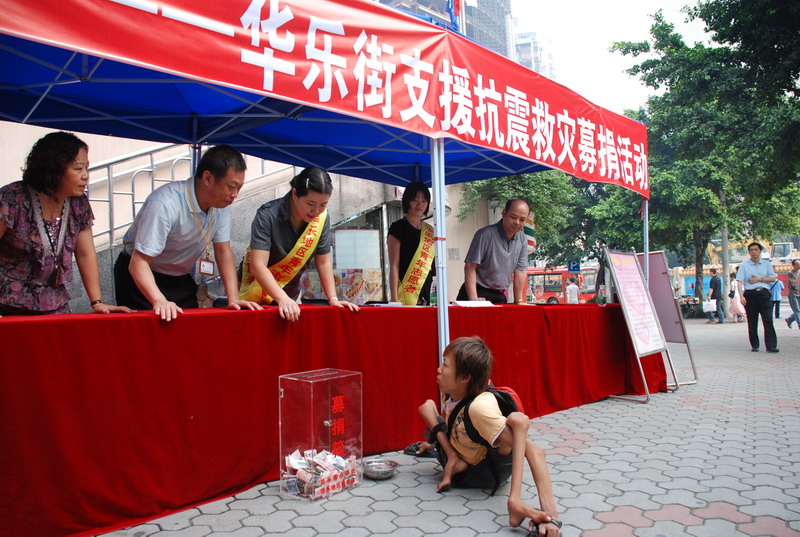
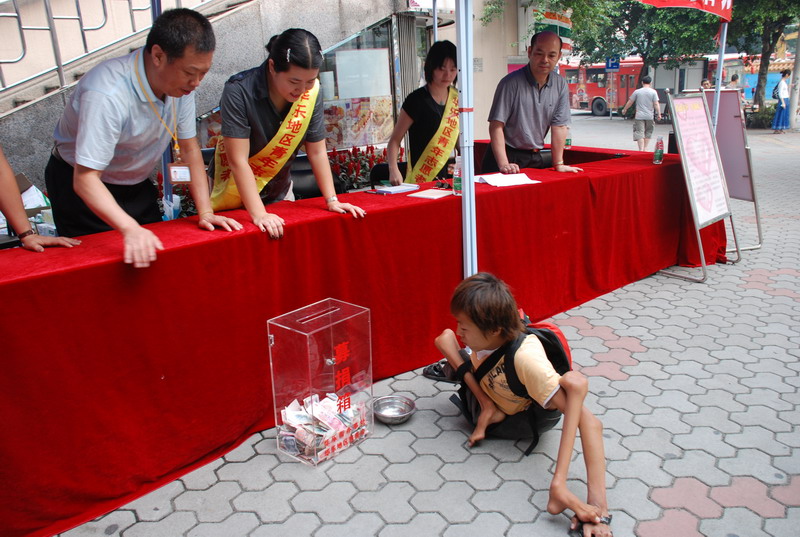
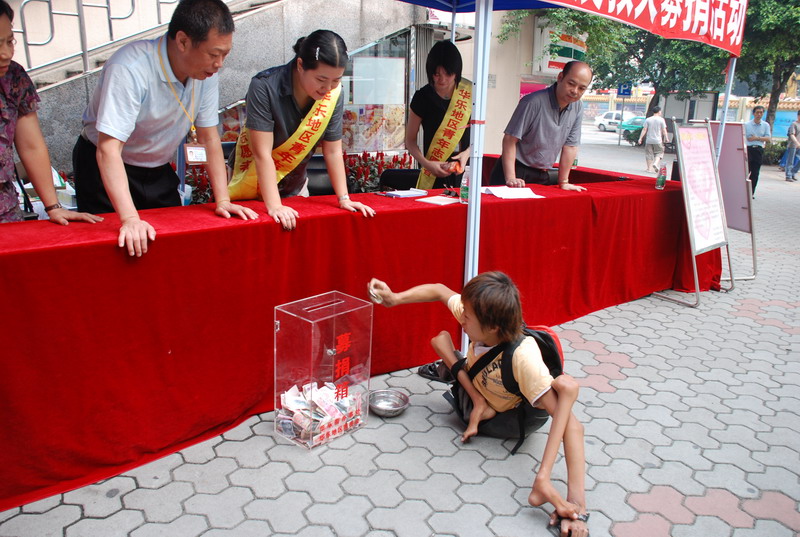
He “walked” across; we thought he was passing by…
 

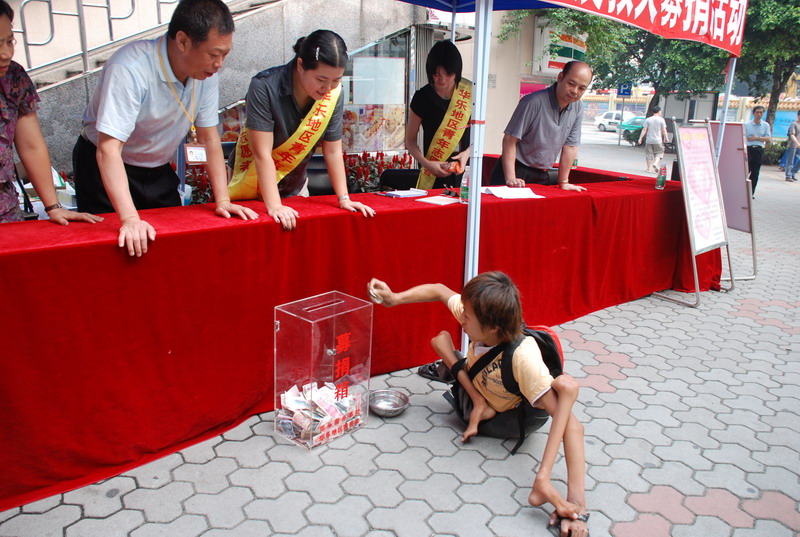
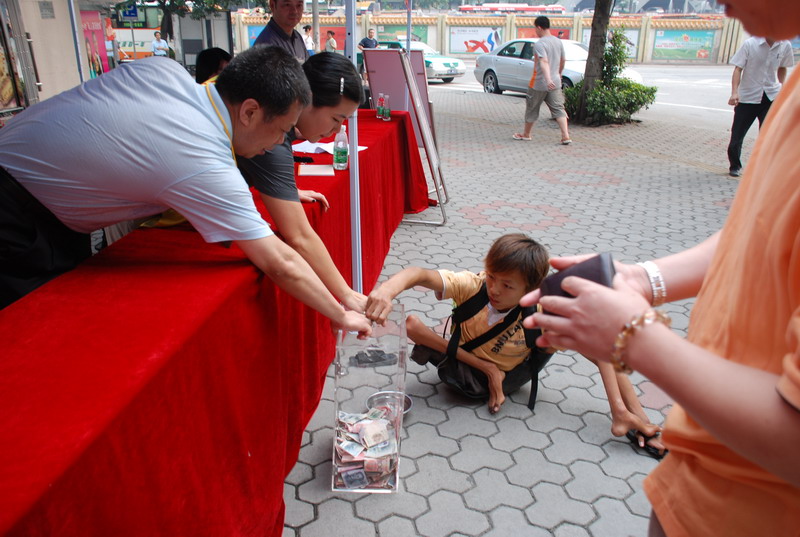
“I want to donate!” He drew out a few coins hidden in his palms. An officer lent a hand but he insisted that he place his money into the donation box.


All are speechless as he gives back to society in his own way!


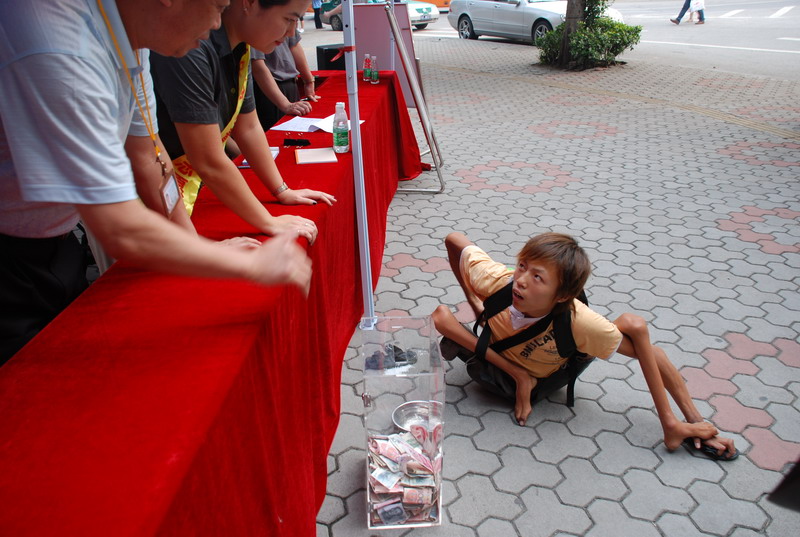
“I still have money!” Again, we are astonished.


He drew out a few ten dollar notes and donated…

Like another story, a long time ago….(Mark 12:42-44)…”Jesus sat down opposite the place where offerings were put and watched the crowd putting their money into the temple treasury.  Many rich people threw in large amounts.  But a poor widow came and put in two very small coins, worth only a fraction of a penny.  Calling his disciples to him, Jesus said, “I tell you the truth, this poor widow has put more into the treasury  than all the others.  They gave out of their wealth; but she, out of her poverty, put in everything–all she had to live on.”