The Faces of Domestic Violence

Facts and figures about violence against women are overwhelming and maddening, but, it’s the faces that give me the nightmares.  There is a new face added to the gallery of survivors I remember…a women spending the night on her friend’s couch in a new town with her three kids,  trying to sort out what kind of future is possible that will keep them safe from her husband’s rages.  I see the faces of those who ended up in a shelter a friend started, or on the couches of friends or strangers, exhausted, afraid, ashamed, looking for temporary safety for themselves and their children…those who, even though they have won in court lost everything except their futures and their children and had to figure out how to build a new life out of courage and not much else. I cannot imagine how powerless that must feel, or how much courage it takes to seek help.  I see those who have survived.  

And the Mom’s aren’t the only ones who suffer.  Dad’s can be abused too.  Kids may or may not be being hit, but they are shaping their view of themselves, of relationships, and of God based on what they see and hear.  

If you’re reading this, and you’re one of those being abused, please tell someone.  Tell a pastor, a friend, a crisis line…get help. Don’t stop trying til someone listens.   A new life is hard, but it can happen.

http://www.metrokc.gov/dias/ocre/dvresources.htm

http://www.way2hope.org/domestic_violence_facts.htm 

http://www.faithtrustinstitute.org/index.php?p=Domestic_Violence&s=28

Jesus Loves the “Other” Children
 

Jesus loves the little children?

Oh really?  Yes, I see…

He must love the other children

(This don’t look like love to me!)

 In the car, while Mom hits Dad

And I sit in the back

Afraid and sad

As we drive to the church

And park in a row

Where all those nice people

That Jesus loves go…

I think of the words 

Those nice ladies say —

“You can get what you want

From God if you pray,”

So I pray, and I pray

And I pray and I pray…

(But it never makes

The pain go away.)


We smile and look normal

As we walk from the car.

No one knows how bad things are.

No one can tell me

Why I feel so bad-

Like Jesus can’t love me

And neither can Dad.


From the Child:A Child’s Perspective on Child Abuse

(Used by permission)
Facts and Figures on Violence Against Women

Today is the “International Day for the Elimination of Violence against Women.” For a minute, let’s imagine a world where at least one out of three women and girls were not subject to being “beaten, coerced into sex or otherwise abused in their lifetimes, usually by someone they know”.  Violence against women is reported by the UN’s Say No to Violence Against Women” campaign to be “perhaps the most pervasive human rights violation that we know today“.  (The following paragraphs are taken from their report)

Statistics paint a horrifying picture of the social and health consequences of violence against women. For women aged 15 to 44 years, violence is a major cause of death and disability [2]. In a 1994 study based on World Bank data about ten selected risk factors facing women in this age group, rape and domestic violence rated higher than cancer, motor vehicle accidents, war and malaria [3]…. 

Domestic and intimate partner violence includes physical and sexual attacks against women in the home, within the family or within an intimate relationship. Women are more at risk of experiencing violence in intimate relationships than anywhere else.

In no country in the world are women safe from this type of violence. Out of ten counties surveyed in a 2005 study by the World Health Organization (WHO), more than 50 percent of women in Bangladesh, Ethiopia, Peru and Tanzania reported having been subjected to physical or sexual violence by intimate partners, with figures reaching staggering 71 percent in rural Ethiopia. Only in one country (Japan) did less than 20 percent of women report incidents of domestic violence [7]. An earlier WHO study puts the number of women physically abused by their partners or ex-partners at 30 percent in the United Kingdom, and 22 percent in the United States [8].

Based on several surveys from around the world, half of the women who die from homicides are killed by their current or former husbands or partners. Women are killed by people they know and die from gun violence, beatings and burns, among numerous other forms of abuse [10]. A study conducted in São Paulo, Brazil, reported that 13 percent of deaths of women of reproductive age were homicides, of which 60 percent were committed by the victims’ partners [11]. According to a UNIFEM report on violence against women in Afghanistan, out of 1,327 incidents of violence against women collected between January 2003 and June 2005, 36 women had been killed — in 16 cases (44.4 percent) by their intimate partners [12].

According to the Secretary-General’s In-Depth Study on All Forms of Violence against Women, by 2006 89 States had some form of legislative prohibition on domestic violence, including 60 States with specific domestic violence laws, and a growing number of countries had instituted national plans of action to end violence against women…

Limited availability of services, stigma and fear prevent women from seeking assistance and redress. This has been confirmed by a study published by the WHO in 2005: on the basis of data collected from 24,000 women in 10 countries, between 55 percent and 95 percent of women who had been physically abused by their partners had never contacted NGOs, shelters or the police for help [13].”


Arrests in Burma Continue

The US Campaign for Burma blog (see link below) lists the growing number of people in Burma being arrested for simple things like blogging, using a computer, doing a comedy routine, speaking for justice-and facing prison sentences of up to 65 years for it.   http://doiyeh.wordpress.com/  

More hidden from view, is the ongoing military oppression and human rights abuses going on in the ethnic areas of Burma.  (For current documentation and pictures, see the Free Burma Rangers site, and the Karen Human Rights Group site).  

Each Sunday afternoon when we go down to Kent to church with our refugee friends from Burma, I am reminded that this is people’s stories being shown on these sites above.  This is not a news item.  These people I try to converse with in spite of language barriers are people who fled those kind of injustices and are trying to make a new life for their children in a country where they hope for all the same things for their kids we do for ours.   Everyone comes with a story and a history and a dream.  

One of the most powerful moments for me, in visiting a refugee camp the 1st time, was when we were leaving, and an older gentleman shook my hand and said, “Please do not forget us.”  Several years later, we were in another camp, and through an interpreter, we asked the headman what he would like the people to in America to know.  He said that they pray for us, that we will not forget them, and that we will use our freedom to speak for theirs.

God help us never to forget those around the world longing for the same thing.

Waiting for freedom

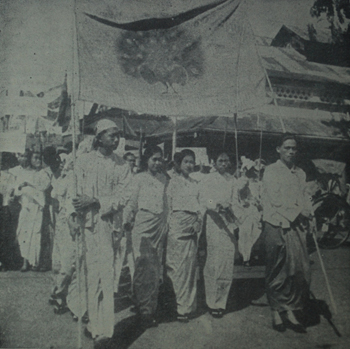
Eighty-eight years after students first led the movement against British rule, the country’s current rulers are busy sentencing student activists to long terms in prison for continuing the struggle for freedom in Burma.”  (see article and picture below from  yesterday’s Irrawaddy)

Students mark National Day in Rangoon 1938
Those who have spoken out, as always in Burma, are still suffering.  Zarganar, a popular comic, was just sentenced to 45 years, and Gambira, a monk involved in the 2007 protests was sentenced to 68 years.  Pastor Eugene Cho included some really good video clips on the situation in Burma and the history of the conflict in his post for today. 
As the picture above from the Irrawaddy demonstrates, Burma has been waiting for freedom and human rights for a long time.  The injustices continue.  US Campaign for Burma has a list of action steps you can do to help speak for and advocate for justice for those suffering under this illegal regime.

What’s love got to do with it?

Not the Tina Turner song, but the title of it, has been replaying over and over again in my head this week along with John 13:34-35 where Jesus commanded us to “…love each other.  Just as I have loved you, you should love each other.  Your love for one another will prove to the world that you are my disciples.”  

Looks like love is supposed to have a lot to do with it!  Not how right, how righteous, how uptight, how socially conscious, how politically correct, how (fill in the blank with your personal favorite) we are…. But how we love each other.  May grace, humility and love guide our dialogue and our interactions, so the world will know who we belong to.

Crisis in Congo-link to a letter to Senators

A google search of “crisis in Congo” returned 2,120,000 hits.  It’s not like the world doesn’t know there’s a problem, a big problem.  Harper McConnell, of Heal Africa, explained that while many international organizations have pulled out of Congo, they are still working in the midst of the conflict.  Their web site tells of the ongoing life changing and life saving work they do.  

Several  ACTION STEPS that we can take are listed on their web site, along with the following explanation: “Through much of the media, the unrest is presented as a tribal conflict, but it is a conflict rooted in control for resources. Resources such as coltan (in latops and cell phones), diamonds, gold, tantalum, minerals which drive the global economy. It is the people of DR Congo who are suffering for the extraction of these minerals which are sold to multinational companies. Write your senator using this letter to tell them to support Senate Bill 3058 and enforce multinationals to follow strict extraction and purchasing guidelines. ”  (There’s also a link to a letter to write to companies using coltan to check their sources, a link to a petition to print out and gather signatures on, and a donation link).  

The video linked here shows another report done by the Pulitzer Center on Coltan and the Congo:  http://www.youtube.com/watch?v=3OWj1ZGn4uM 


“Where are your poor?” (poem)

That was the question our friend Rigo, a Nicaraguan pastor, asked when he visited the US for the first time back in 2000.  Where he pastors, members of several warring drug gangs lay down their weapons outside and call a temporary truce before coming into church.  If they come to faith and leave the gangs, there are no jobs.  They cannot support their families.  Unemployment benefits do not exist.  Churches in North America helped raise money to help him start a woodshop where the guys can learn a marketable skill.  They have plans for other projects as well.  


“Where are your poor?” our honored guest said.

(I was humbled by his words.

His eyes had observed that our country is rich,

Richer even than what he had heard).


In his country many many are poor,

Much poorer than we’ll ever see.

His church gives away what little it has

Just trying to meet their needs.


We give a little while they give a lot

(Seems like the reverse should be true).

Forgive us, Lord, for failing to see

How many times we ignore You.


Give us hearts to see You, Lord,

In the hungry, poor and cold.

Give us hearts to gladly share

Our lives and the things we hold…

To value our brother

More than our comfort.

To know when we give, we receive,

And that we can never

      out-give Your provision—

Lord, help us live

     what we say we believe!


**************************

In Nicaragua, you see the poverty everywhere.  It is not invisible.  Here, it looks like even poor people are rich.  We try to hide our poverty.  But if you look closer, the poor are among us.  God, teach us.

“God, make me angry, and in my anger help me to act”

The above quote by Chris Marlow was his prayer for the year. I love that prayer. I read his amazing post this morning about why he is passionate about the work his organization, H.E.L.P. does to help orphans in Zimbabwe, and was impacted.  

As a Christian, seems like some of us tend to anger over the wrong stuff-not the stuff God gets angry about, like injustice!  We get angry about inconvenience or disappointments or standing in a line somewhere, or someone late for an appointment.  And then we get depressed over injustice-not empowered.  Ecclesiastes 3:1 says “there is a time for everything.” Ephesians 4:26 says “be angry and sin not.”  So looks like it’s possible to be angry and be empowered, instead of staying at stuck at overwhelmed and DO something to use that energy to promote change and justice and live out our faith?  

The other part of Chris’s post dealt with why he was so passionately involved with what he was doing, and he’s trying to do a lot!  I resonate with that one too.  (The passion part-I’m only doing small things).  It’s always about the people.

A few years ago my husband and I had the privilege of going to Thailand and went to one of the refugee camps with a pastor friend there.  As we met people in person whose work we had supported from here through World Aid, Inc., I was permanently changed by what I saw.  I remember the moment where I realized Galatians 6:3 “Bear one another’s burdens and fulfill the law of Christ,”  was not an option or a warm fuzzy thought.  It’s a command.  

As a mother of three children, I could relate in a very small way to some of the burdens the women of Burma face. I have given birth with the privilege of having medical care and a safe, comfortable place to do it in, and then time to recover.  I cannot imagine giving birth in the jungle without assistance, while you are trying to run from the military.   My three beautiful babies are now three healthy adults who have gotten or are getting the education they need.  I cannot imagine losing your babies to malaria or having them become a statistic in the high infant mortality rate that is Burma.  My husband is alive and well.  I cannot imagine seeing family members killed or blown up by landmines. We voted this week.  I cannot imagine running from an illegal government and having  less rights than a sea lion has here in America (although I know some Americans can).  These are some of the burdens they bear. That day, I knew I had to do something.  It became personal, mother to mother.  

What am I angry about?  I am angry that people die needlessly and that mothers who love their children as much as I love mine do not get to see them become adults.  Two friends, Leah and Alan, asked for meaningful wedding gifts last year…..they got malaria nets for 40 donated in their name.  We (World Aid), support the work of the Free Burma Rangers relief teams, who bring food, medical and dental care, and hope to IDPs in Burma, of a nurse who helps support Karen Women and Children both in Burma and those needing to come across the border for more extensive medical treatment, a nurse practitioner going to provide medical care and education for the Akha people in Thailand, support education projects for IDPs through the Karen Teacher’s Working Group, support those who are trying to rebuild their lives after Cyclone Nargis and more.  These are a few of the ways we can help bear their burdens.  

“God, make me angry, and in my anger, help me to act.”  And please God, don’t ever let me forget the people on the other end, who I may never see, but whose lives will be changed because the body of Christ, and the heart of God, have not forgotten them.

Remembering the Vulnerable

I heard about some angels today….a teacher in Kent who bought a couple of pair of shoes for one of the refugee kids (one to wear now and one to grow into), Laurel and Chris who dropped off a microwave and towels and some other things for newly arrived refugees, a fisherman friend who didn’t find a tender to sell his fish to and is bringing over 19 salmon to cut up and take to refugee families in Kent today (people struggling with being on the wrong end of the economic food chain who don’t have rent money or jobs right now), a church in Kent who offers Fred Myers gift certificates to student’s familes, the leadership at Quest who continues to partner with the refugee church and community in a variety of meaningful ways (like paying half of the insurance for the community center so the offerings the refugees raised can help pay rents for those who are recently laid off) An angel at church this morning, an angel named Barb, gave me a big bag of warm socks to deliver to folks. I am SO grateful for angels!  

While many people right now are concerned about their own economic future (and present), those in low skilled minimum wage jobs (especially newly arrived refugees with limited English skills and little education) are experiencing a lot of lay offs, and some are having to relocate to other areas of the country where rents are not so high and jobs may be more abundant.  Tough times for many people, but really tough for those on the bottom. They’ve already lost their country, they don’t have homes to lose, or retirements to worry about.  They’re trying to learn how to get by here and now, learn the language, and develop the skills needed to support their families in this country.  Grateful for freedom and safety, but the challenges to still be overcome are enormous! 

While I was looking for statistics to go with this thought, and (sleepless in Seattle), I found this Shane Clairborne video that is SO worth watching….  It’s six minutes long, but stick to the end-the timely financial perspective (even though it’s a year old) is huge.  The images and the music are both worth it. 

Thanks to the angels who continue to remember the vulnerable, and do something about it!

Newly Elected Head of Karen National Union

Naw Zipporah Sein, a long time leader of the Karen Women’s Organization, and former Nobel Peace Prize nominee, was elected head of the Karen National Union (KNU) last week.  The YouTube video linked below shows an interview done in July of 2007, discussing the situation in her country and the ways she has been involved in advocacy for many many years.   She is a leader who tries to bring unity, who “reaches across the aisle,” and who serves her people with integrity….. may God bless her, give her wisdom, and protect her.  (The last person who had this job was assassinated in February of 2008).  

http://www.youtube.com/watch?v=bsxb58XzGi4

A Nurse’s Work-Karen Community Support

Karen Community Support:  One of the amazing people we get to support through World Aid is a nurse who graduated from SPU a few years ago.  Some of the creative ways she’s been able to use her hard earned skills are highlighted in this report she sent…… 

Medical Support:
Medical and public health training              Field medic kits & materials for medics

Patient Care:
Receive serious cases evacuated from jungle   Care of patient and family throughout their recovery 

Women and Children Projects:
Support of widows and frail elderly   Encouragement to young women in leadership
Distribution of children’s Healthy Living materials

Karen communities stick together and help one another to face all kinds of struggles. Karen Community Support responds to the needs of the most vulnerable—the sick, women and children, and the recently displaced. In addition to support and training for mobile health clinics, over twenty patients from inside Burma were evacuated out to Mae Sot, Thailand last year. They were given long term advanced treatment and support during their recovery. 

 Hope amidst the hopeless — Uncle Nu Lay’s story

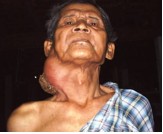
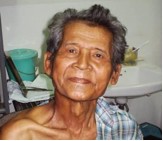
Meet “Uncle Nu Lay”. This 69 year old villager has 4 teenagers still living at home with he and his wife. He has had neck pain for a year and recently suffered a painful swelling lump. Most people believed he was going to die, and so nodded sympathetically and passed him by. A Karen leader and dear friend of mine met him and determined to help him—even if there was no cure. Together we sent him to the hospital, where they were able to operate to drain the painful infection he had. Two days later I found him and his wife (so disoriented in the city) quietly sitting on the hospital window sill, listening to the birds sing and the wind rustle the trees. He told me over and over how grateful he was to me and the Karen leader that we stopped to look at him, instead of passing him by. He spent one week recovering in Mae Sot, Thailand, then returned home with his family.

Local Authorities Deny Villagers Food Aid in Chin State

The three articles linked below highlight the ongoing food crisis in Chin State in Burma.  People are starving due to a plague of rats.  Once again, as after Cyclone Nargis, authorities are denying food aid to people in need, or, as the FBR report in the second link, hijacking donated food for their own use.  While this comes as no surprise, it continues to highlight the incredible need for justice, basic human rights, and appropriate response from the world community.  If it was your kids starving, how would you want the world to respond?  I’ve been haunted the last few days by a quote from Cornell West that I found on simplymissional.com  “Justice is what love looks like in public…”  God, help us learn what that means and how to live it! 

http://www.irrawaddy.org/article.php?art_id=14447

http://www.freeburmarangers.org/Reports/2008/20080719.html 

http://news.bbc.co.uk/2/hi/asia-pacific/7633986.stm


It’s Always About the People (a commercial)

 There’s a lot of talk about Joe the Plumber this week-maybe representing a sudden interest in the opinions of working people?  So, since yesterday was my last day as bookkeeper at Ballard Optical in (where else) Ballard, I’m going to throw out a couple of opinions here regarding the people I work with and why it’s so important to value the people you work with, those you work for, and those you serve.  

Lisa, in the picture above, is technically the receptionist, decorating goddess, recycling queen, and a good friend.  She is also now the temporary bookkeeper (not her first choice!). She treats each person who comes in, or who calls, as if they were family, maybe better than some families.  It’s not a show.  She really does care, and it goes way beyond just the business part-it goes above and beyond to the human thing and sincerely valuing people.   

Cynthia, one of the two amazing opticians who work here, is one of the nicest people I’ve ever met.  She sincerely cares about each customer as a person, not just a business deal.  Besides that, she’s good at her job, and she’s a lot of fun.  Gentle caring people make for a for a really good workplace!  

Isabell, who like Cynthia, was too busy for a picture yesterday, has been fitting glasses, choosing fabulous frames, and lovingly caring for people in this business (and the rest of her life) for a long time.  She also goes above and beyond reasonable care in making each person feel valued and listened to, and trying to find solutions that work.  Amazing lady.  

And then there’s the boss, Dr. Kimpton.  He’s been at this business for over 34 years, and is really good at it.  The kind of guy you would want for a Dr. (thorough, systematic, stable, and fair).  It was a pleasure to work for him for the last 4 1/2 years.  

I guess what I saw in my coworkers here each day was the living out of the unwritten rule that good customer service comes from treating customers like you’d want to be treated.  Applied theology in the eyeglass business.  Go figure.  If you follow that rule, you can find dignity and meaning, even in a working class job like this, and live in a way that treats even difficult people with dignity and lets you keep your dignity as well. I’m gonna miss these guys!

Karen Refugee Community Update-Seattle

This recent report from Maggie gives a glimpse into the growing Karen refugee community here, and the challenges people face in resettlement……

       “…Since July, 15 new families and two free cases arrived in Seattle and the total number of refugees has grown from 224 to 284 people.  This number applies only to Karen refugees living in the Seattle area and not to the Chin population and the Karen living in Kitsap county. People are working together helping to meet the needs of the community according to the knowledge, skills, talents, and time they have.

       Within two months, about 50 people got laid off and only 10 people regained jobs so far. Due to language barrier and the lack of education and skill, it is very difficult for these people to find jobs. Some people do have jobs, but they are minimum wage jobs and their incomes barely cover their rent. The families are in a tight financial situation.

       Children  also face difficulties at school because of language barrier and the lack of support at home. Parents have no education to help their children with school work nor have parenting knowledge to discipline their children. Children cannot stay for after school programs to get extra help with school work because they have no transportation.  Parents cannot talk to school counselors to get them more help due to not knowing the language.  Some children are doing so-so, some are doing poorly, but none have gotten into serious problems yet.  Many of the children are at risk of dropping out of school.     

        Despite problems and difficulties, the community is being there for one another. Gay Htoo who was a teacher in Mae La Camp and Naw Dah who has some education help the children with their homework. Johnson got laid off recently and so he has  time to take children as well as adults to doctor’s or dental’s appointments and even to ER and interprets for them. Say La Wah also got laid off so she has time to go to ESL class to improve her English and also takes care of her neighbors’ kids when they have to go to doctor’s appointments. Ku Gay, Htee Haw and Sammy Htoo have lived in Seattle for one year so they show  the new arrivals how to take the bus.  Htoo Htoo and Say Say are errand boys, Pwint and Simon are quick to respond to the community’s needs  and Steve is 911 for the community. 

         Finally, we would like to thank those who have continuously supported us with things such as our community center space, bus tickets, rice cookers, school supplies for the children and other things. We would like to thank Teacher Jenny and the women’s group for their donations. That helps the new families with some of their basic needs and the school supplies for their children.  We will always treasure and appreciate your help and support.”  


Cylone Nargis Relief Update-Sept. 24th

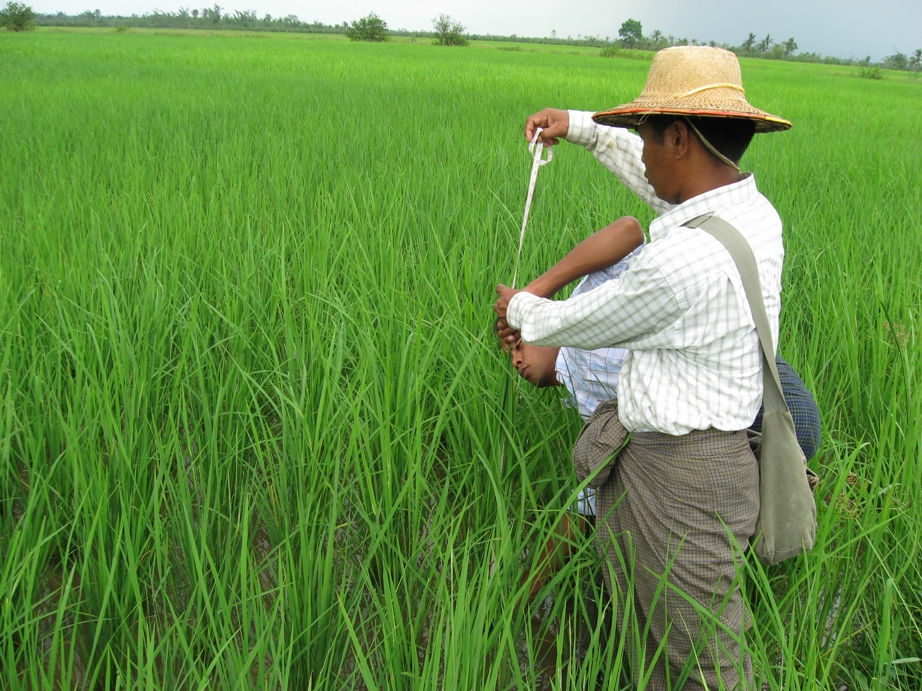
The following is a field report from the team leader of a Yangon/Rangoon based cyclone relief team.  One of their missions (in addition to providing food, education support and medical care) is to implement a new method in the Delta region to mitigate ongoing rice shortage caused by the cyclone. 

 24th report-27 September 2008–“I found my time to return to Kyaung Zu today. Two of my friends were there last night staying over with the teacher they hired for the 10 grade kids in Taw Kyaung School. There are altogether 24 students from all villages around. They are provided with free tuition by my friends. One of the single-wheel tractor engines is joined with a dynamo for the power to provide lights for the students and the teacher. Free board and lodging are provided to 5 boys and 4 girls out of 24 students staying at our camp. I met my friends at Kungyangon andthey left for Yangon. I have helped shop some of the necessary stuff; with the expert farmer, his assistant and villagers.  Florescent lamp sets and wires were purchased for the students. Some of those are going to be installed at the new bamboo hut (the third one at the camp) some are for adding to the old building. The two buildings are to separate the boys and girls.

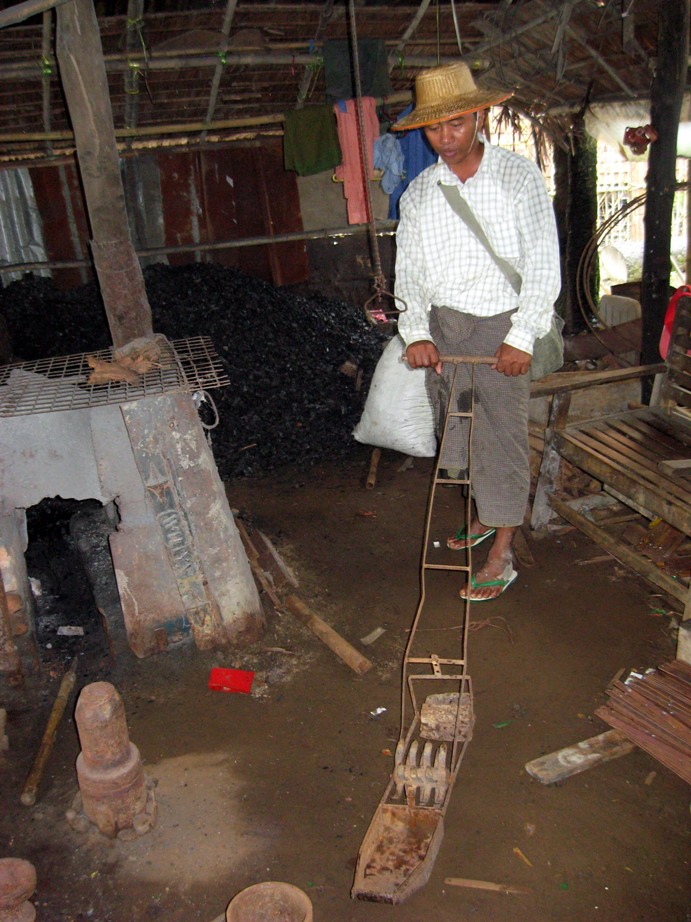
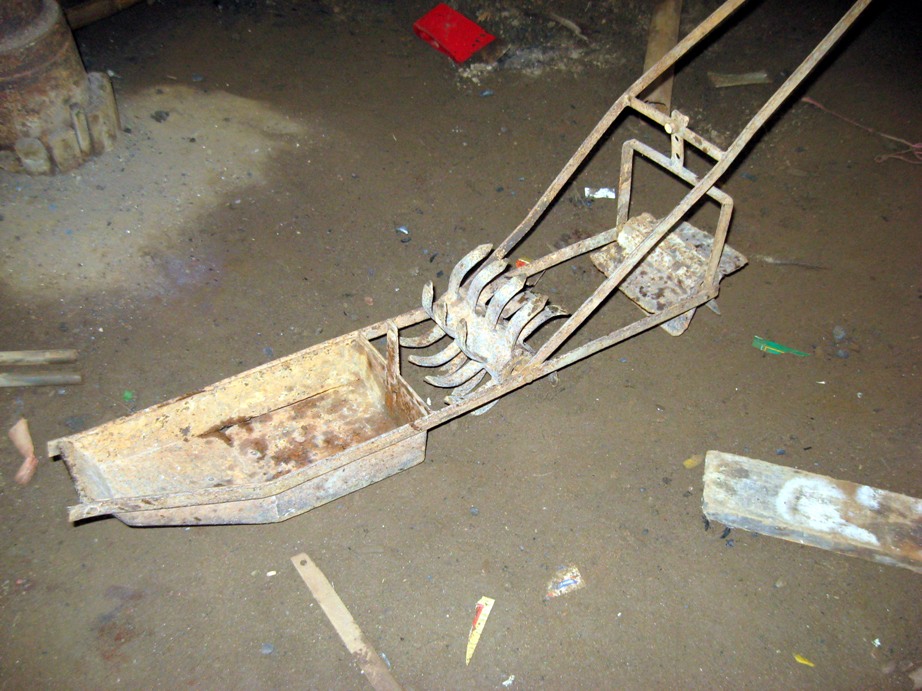
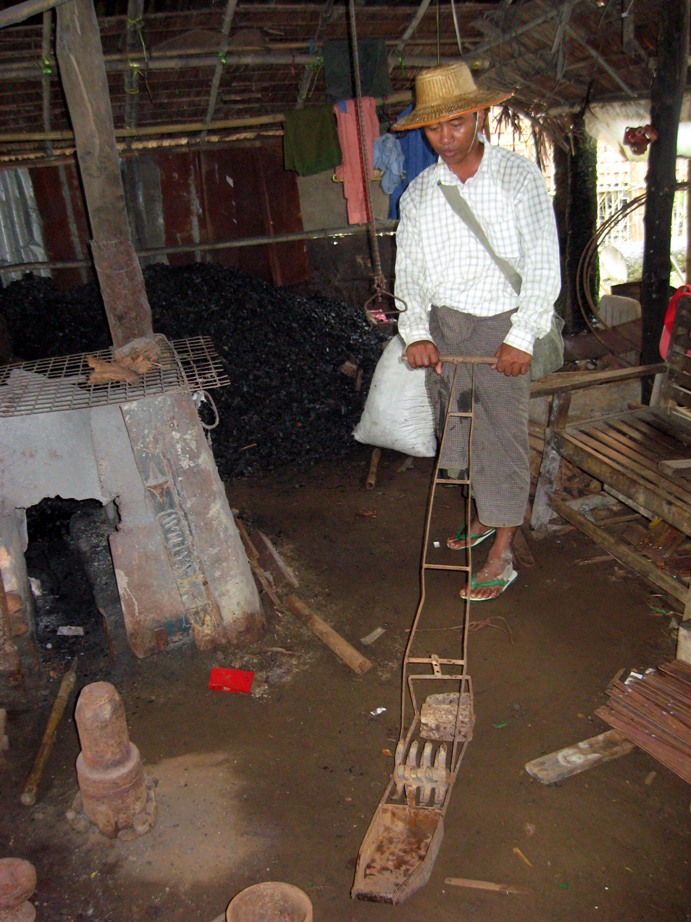
 The weed control has been going on since 13 September. Average 10 to 15 people are hired for the weeding, the spraying insecticide only where needed and the cleaning and clearing the wacked weed out of the plots. The two prior tasks are done by men and the latter by both  females and males. Then expert farmer and I went to collect a new intercultivator at the blacksmith. Five intercultivators were ordered and four of those are already being used since 13 September. The blacksmith finish making those one by one and gave us at different dates but there is one more ordered. The nice little machine (the interclutivator in photo 1 and 2) can be pushed between rows of rice plants to uproot the weed with the first little fan and the second one behind with four blades cut the weed. 

 After the visit to the blacksmith in Kungyangon the expert farmer requested me for purchasing some plastic containers to get Effective Micor-organisms (EM) for the rice fields from the agriculture department. (The funny fact is that nobody else but we know how to use it and there are two big barrels of those at the agricultural department.) The expert farmer and villagers went and collected those in newly bought plastic containers. 30 gallons of Concentrate EM (from which we can dilute into 10 times to get instant EM to spray on our plants) in 3 containers carried by a trishaw were brought to the landing place where our motor boat tied up.  On the way in we stopped by at two different areas of the two landowners for whom we have been taking full responsibility for introducing our SRI method. You will have to remember we have started the seedlings on 5 and 10 July. The kinds of rice plants we are growing are two different kinds of long-term rice called A-yar-min and Bay-gyar (135-150 days). 
We are now at the stage of tillering and we have an average of 25 to 30 tillers at one hill. Our plants are going to be 90 days old in the first week of October. Between 90 and 115 days is called (as I understand what I’m explained by expert farmer) panicle initiation stage just like the plant being pregnant for yield the skiplet or grain. The skiplet will come out and grow from 115 day onwards until
harvest. So the harvest will be after in the late November. After seeing the plots and the weed whackers we hired we continued to get to Kyaung-zu village in Taw Kyung village group where our camp is located. We had lunch at the camp with pickled tea leaf salad. After our lunch the school time was over and some students run into our camp library for hiring schools. Some 10th grade students picked up the newly arrived exam special guide books (brought by my friends) to pass to the others. As a result to our attempt to educated the students by planting some vegetations behind the school they had picked over two hundred corn the other day. Those were boiled at our camp and shared
among some 350 students half apiece. I was also given some 35 pieces of okra as gifts as they do to my other friends. The time I got back to the taxi stand was 4:15 p.m. and I could catch the last seat at the luggage compartment in the back of a regularly-run communal taxi. I had to lie down because the other two have already filled the space. The reason I cannot sit up straight the 45 degree slope of the
windshield of the station wagon. My backpack is my pillow and I bent my knees and keep those upward. Half way down I snoozed at the rhythm of the hood thudding of all loose nooks and crannies along the bumpy road. Not bad huh!” 

8the-height-of-a-plant-we-measured-is-36-inches